Publications
|
An interview
|
On his site Jeff Cates's Author Showcase, Jeff has published an interview with me. | I'm the fourth interview that Jeff has presented. He sent me a list of questions that I answered. He asks different authors the same key points but varies the format by also including unique questions. The result is fun and interesting.
|

"Bliss," Electric Spec, volume 17, issue 4, November 2022. | Among countless planets in the galaxy, some are different from others. Perhaps very different. And just perhaps the planet's oceans, seas, and rivers were a high quality of alcohol. What happens to a spaceship on such a planet? That is, a sentient spaceship. What happens to the crew? My SF story "Bliss" covers it all.
|

"A Light in the Forest," Samjoko Magazine, Fall 2022. | So how does one deal with the unexpected? Suppose, for example, you're in trouble, and then right in front of you someone offers something. Do you accept it? Or continue running. My story is a fantasy (with an injection of humor, of course), but the situation is worldwide.
|
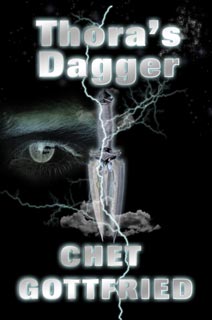
Thora's Dagger, ReAnimus Press (July 2022, 295 pages). | A few months after the end of The Gilded Basilisk, Hugin and Gier become entangled in murder, kidnapping, conspiracy, witches, and more double-crosses than you could shake a dragon at, depending on which dragon you come across. Thora's Dagger is a completely independent novel but does have the further adventures of The Gilded Basilisk's heroes.
The ebook for Thora's Dagger is available from ReAnimus Press which has a link to Amazon for the print edition.
|

"Unlikely Presents," in The Periodical, Forlorn: Haunted Holidays, December 2020. Carlisle, Danger Callahan, and Ceilidh Campbell, editors.
| Now here's a way to help round off 2020: A science fiction tale set on another planet during which someone familiar from way back on Earth appears. | |
|
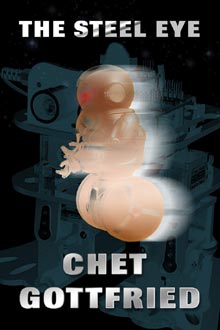
The Steel Eye ReAnimus Press (November 2020, 180 pages). After 36 years, The Steel Eye is back in a splendid new edition as well as available as an ebook. So swill a little grease with me, and enter a world run by robots: corporate robots spanning multiple bodies; cop robots armed and dangerous; robot entertainers, drinkers, workers, villains, and the odd innocent victim. Into that hard-boiled world rolls the steel eye, a robot detective who faces treachery from friends and allies but keeps on tracking his elusive quarry. And for those who prefer Amazon, The Steel Eye is available there too, as well as at other online bookshops. In addition, Carol Kean has a splendid and extensive review of my novel at Amazon. | ||||||||||
|
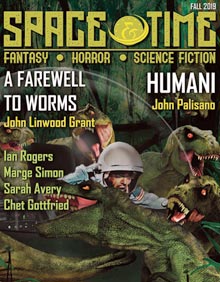
"Marching Band of the Dead,," Space and Time Magazine 134, fall 2019, pp. 45-48. Angela Yuriko Smith, Editor-Publisher; Gerard Houarner, Fiction Editor; and other editorial staff. The One-Legged Marching Band of the Dead comes into town (in central Pennsylvania), the results of which cause a certain amount of mayhem. My story is illustrated by Erick Eyerman, and Angela really went all out in designing a spectacular issue. Furthermore, Space & Time is going audio, and you can listen to "The Marching Band of the Dead" on my site. | ||||||||||

|
"Easy Karma," in Strange Mysteries 8, Jean Goldstrom and Arthur Sanchez, editors, Whortleberry Press, 2019, 176 pages.
After too long an absence, Jean Goldstrom and her Whortleberry Press are back with volume 8 in the series Strange Mysteries. "Easy Karma," a mixture of science fiction, fantasy, and horror, is anything but easy for the main character, Jocelyn Hawksen, who desires to be something better than a low-level ghoul. | ||||||||||
|
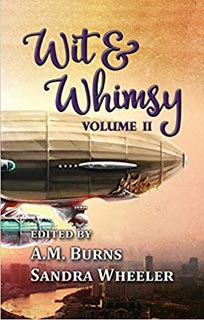
"An Inconvenient Slip," in Wit & Whimsy, volume 2, A. M. Burns and Sandra Wheeler, editors, Shiny Garden, 2019, 220 pages. Wit & Whimsy is the WhimsyCon 2019 anthology, and I only happened across it by doing a web search for the anthology, which turns out to have been published and available on Amazon since February 2019. My contribution involves a slip into another dimension, one without pet dinosaurs but with a good dose of treachery (and I assume the story is included since my name is listed on the back cover). | ||||||||||
|
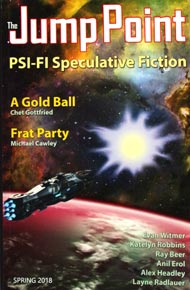
"A Gold Ball," in The Jump Point, spring 2018, the magazine of the Science Fiction Society at Penn State (PSI-FI). For this issue, the editor in chief is Anil Erol and the director of fiction is Layne Radlaue.
The spring 2018 issue is a print edition (and nicely done too). The print edition is available for free around the Penn State campus, and it is also available to be read online or downloaded. My fantasy story involves a fellow who would like to apprentice himself to the only assassin in town. | ||||||||||
|
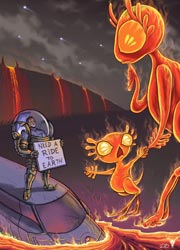
"Pitching a Bug," in Perihelion Science Fiction, Jan. 2018. Sam Bellotto Jr., editor.
In my story, an alien sales rep works on a cosmic scale. Let the galaxy beware! | ||||||||||
|
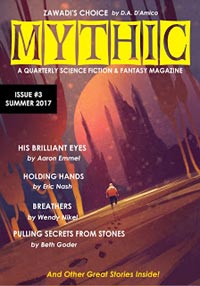
"Encounter at Durheim Crossroads" in Mythic: A Quarterly Science Fiction & Fantasy Magazine, 3 summer 2017, pp. 77-84. Shaun Kilgore, Editor. Mythic is a handsome magazine in print that is available from its site. My fantasy story features an atypical (and humorous) encounter that expands to include competing characters and outcomes. | ||||||||||

|
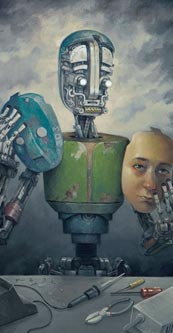
"Trust Us: We're Aliens," in Perihelion Science Fiction, April 2017. Sam Bellotto Jr., editor. So what would aliens visiting Earth really and truly want? Are they after raw materials, workers, insights, or could it be something else entirely? What about a business deal in which everyone makes a profit? Of course, in real life, as well as stories, not everyone benefits, but those who do can have a great deal of fun. | ||||||||||
|
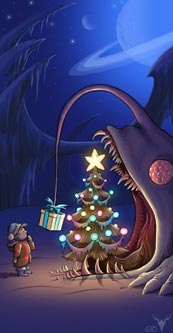
"Fifteen Tomorrows," edited by Sam Bellottio Jr., in Perihelion Science Fiction, February 2017. Sam Bellotto Jr., editor. For the new year, Sam asked a bunch of us to write a vision of the future and collected fifteen versions, including one of his own as well as ones by Carol Kean (the esteemed Perihelion book reviewer) and my writer-friend Mord McGhee (author of Ghosts of San Francisco and other novels). | ||||||||||
|
"This Is the Way the World Ends," edited by Carol Kean, in Perihelion Science Fiction, December 2016. Sam Bellotto Jr., editor. Carol had several writers write short pieces on how the Earth would or could be destroyed - lots of fun! My own contribution became a sidebar to the main article; I also made a video to accompany the text about the Omega56 Magnum Space Nail (Important: Use only per the directions). | ||||||||||

|
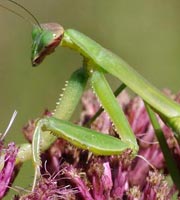
"Insect under the Lens," in Perihelion Science Fiction, November 2016. Sam Bellotto Jr., editor. Sam asked me whether I'd be willing to write a piece on taking insect macros, which combines two of my primary interests: insects and photography. I said yes! It became my final completed work right before my accident, in which my neck was broken after I was hit by a two-man glider. The article won the Preditor and Editor award for best nonfiction of 2016. | ||||||||||
|
"Playing with Dinosaurs," in Perihelion Science Fiction, July 2016. Sam Bellotto Jr., editor. It had to happen sometime or another: One of my nonfiction pieces, although as with everything else I write, the subject is treated with a sense of humor. For those interested in dinosaur-related topics, as well as for those - via the annotated links at the end - who like to keep their dinosaur knowledge up to date. | ||||||||||


|
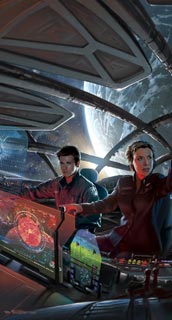
Into the Horsebutt Nebula ReAnimus Press (July 2016, 274 pages). My new SF novel can be thought of as Mad Max slamming into the Hitchhiker's Guide during the Night of the Living Dead. In the novel Captain Sam Baines, his zombie crew (wearing their official Earth Fleet bikinis), an alien (who looks remarkably like an oversize squirrel), and a bottle of Bass ale begin a quest on behalf of the most important dandelion of the Milky Way. I've made a promo video for Into the Horsebutt Nebula. My second Into the Horsebutt Nebula video features the butterfly effect of the ninth celestial harmonic. On Amazon, Carol Kean wrote an excellent (and long) review of Into the Horsebutt Nebula. I had a terrific interview on Central PA Live by Dawn Pellas about Into the Horsebutt Nebula. In January 2017, the Preditors and Editors Readers Poll voted Into the Horsebutt Nebula as having the best cover; the novel itself finished in seventh place (a lucky number). | ||||||||||

|
"Those Golden Years," in Perihelion Science Fiction, April 2016. Sam Bellotto Jr., editor. Over-the-hill space pirates take another final mission, and the question in the story is, How many things can go wrong before anything goes right? A second significant question is, Who's the father? | ||||||||||
|
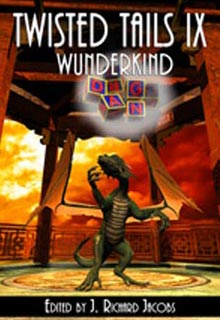
"Anyone Nice," in Twisted Tales IX: Wunderkind, J. Richard Jacobs, editor, Double Dragon Publishing, 2016, 118 pages. Wunderkind is an anthology of 10 stories. My contribution is an alternate (or twisted) reality of a fun-filled dysfunctional family, in which a young son has a challenging problem, that is, murdering someone nice. | ||||||||||


|
Einar and the Myrtledale Conspiracy, ReAnimus Press (July 2015, 266 pages). For book 2 of my Einar series, sixteen-year-old Einar goes to Myrtledale and into a whirlwind of tournaments, assassins, and Barbara Bloodbath's plan for a new ice cream parlor. Einar and the Myrtledale Conspiracy is a young adult fantasy suitable for adults of all ages. February 2016: The official results from the Preditors and Editors Readers Poll have Einar and the Myrtledale Conspiracy winning first place in the categories of "Best Cover" (thanks to Erick Eyerman's wonderful artwork) and "Best Young Adult Book." Einar 2 has nine 5-star reviews at Amazon.
Visually oriented? Try my Einar 2 video at Youtube.
| ||||||||||

|
"Apple Crumble," in Ad Astra: The 50th Anniversary SFWA Cookbook, edited by Cat Rambo and Fran Wilde (SFWA, 2015). Lots of recipes for fun stuff, whether eating, snacking, or partying. I happen to be partial to apple crumbles, but that's me. | ||||||||||

|
"Present Trouble," in Perihelion Science Fiction., October 2014. Sam Bellotto Jr., editor. For my SF story, all the action is compressed within an hour, and isn't it surprising how many incidents can occur when time travel is a factor? | ||||||||||
|
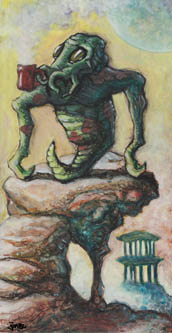
"His Special Birthday," in Perihelion Science Fiction, June 2014. Sam Bellotto Jr., editor. How many ways can a birthday go wrong? Since my story includes aliens (the extraterrestial type), you can be sure the answer is, "Endlessly." | ||||||||||

|
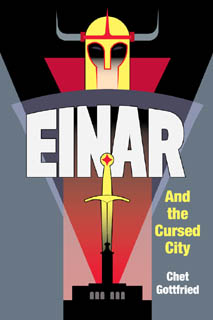
Einar and the Cursed City, ReAnimus Press (2014, 282 pages). Sixteen-year-old Einar enters Jorghaven for dueling and desserts, but a curse has changed everyone except Barbara Bloodbath, who needs his help to free the city! Einar and the Cursed City is a young adult fantasy suitable for adults of all ages. News (18 Jan. 2015): Einar and the Cursed City took first place in the 2014 Preditors and Editors readers poll in the category of young adult novels. After the first good reviews for Einar over at Amazon, I put together a pdf press release with all the basic information about my novel.
Visually oriented? I've an Einar video at Youtube.
| ||||||||||

|
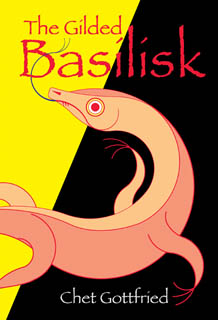
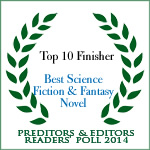
The Gilded Basilisk, ReAnimus Press (2014, 300 pages). The Gilded Basilisk is a fantasy novel that combines suspense and humor in following the adventures of four characters - Hugin, Gier, Ratatoska, and Hildi - while they encounter assassinations, wars, a basilisk, a dragon, and weirdragons to resolve the fate of two kingdoms, Farringdale and Loweswater. The press release on my site has more information on availability and formats (print and ebook), as well as excerpts from reviews and a view of the beautiful wraparound cover. News (18 Jan. 2015): The Gilded Basilisk took third place in the 2014 Preditors & Editors Readers Poll in science fiction and fantasy novels. Erick Eyerman's brilliant wrap-around cover for the Basilisk took first place in the poll for book covers. I made a 3D clip highlighting the wonderful cover of The Gilded Basilisk. Jeffrey Goodsell did a hilarious Youtube video for the Basilisk.
And should you like to buy The Gilded Basilisk direct from my site (via Amazon), click here.
| ||||||||||

|
"Funny Money," in Perihelion Science Fiction, January 2014. Sam Bellotto Jr., editor. My story features an alien traveling as U.S. currency in order to tour Las Vegas (which is a major attraction, I'm sure, for aliens everywhere). From that point, the question is, What can go wrong, with the easy answer: Everything! Well, while there are right moments too, the fun is jumping from wrong to right and back again. Which will triumph in the end? | ||||||||||
|
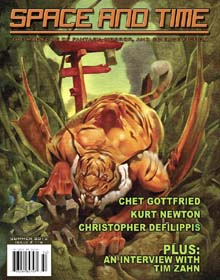
"The Inadvertent Wizard," Space and Time Magazine 119, summer-fall 2013, pp. 32-35. Hildy Silverman, Editor in Chief; Gerard Houarner, Fiction Editor; and other editorial staff. Wow! I'm listed first on the cover of Space and Time Magazine! The opening point in my fantasy story involves having a toothache before a tournament. What else can go wrong? What if you developed an unexpected talent on top of everything else? | ||||||||||
 |
"Boccaccio in Outer Space" in Perihelion Science Fiction, June 2013, Sam Bellotto Jr., editor. "Boccaccio in Outer Space" has an unusual history. The story began life as bizarro science fiction, but Sam thought it would work better as straightforward if ribald humor. He made a number of suggestions for a rewrite as well as giving me a brilliant idea to apply, and I'll never turn down a brilliant idea. Sam liked the rewrite, and the story, featuring an odd twist of bioengineering, is available for one and all to read.
| ||||||||||

|
"Born Lucky" in the anthology, Strange Lucky Mysteries, Arthur Sanchez, editor (Whortleberry Press, 2013). Jean Golstrom is the publisher of Whortleberry Press. My story involves science fiction, fantasy, and horror, as well as murder, starring a character who has either incredibly awesome luck or bad luck. You decide. Plus factors include your choice of either a handsome print edition or a handy ebook.
| ||||||||||
|
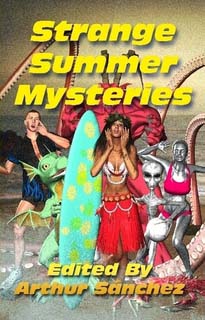
"Born-Again 'Bots," in the anthology, Strange Summer Mysteries: A Day at the Beach, Arthur Sanchez, editor (Whortleberry Press, 2012). Jean Golstrom is the publisher of Whortleberry Press. (Who wouldn't love the name Whortleberry?) My contribution features my hard-boiled robot detective tracing a missing shipment of robots, which leads to larger problems (of course).
| ||||||||||
|
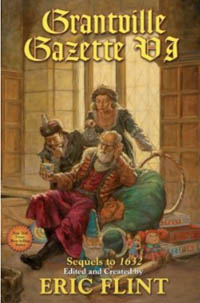
"Mrs. December, 1636," Grantville Gazette VI (Ring of Fire), January 2012, edited by Eric Flint (Baen, New York, 2012).
After all these years . . . I've finally had a story reprinted - and in a hardbound book too. Definitely a good way to begin the year. The anthology has stories first published in the Grantville Gazette, devoted to the 1632 universe created by Eric Flint, beginning with his novel 1632. The underlying theme is that of a small West Virginian town being transported back in time to the 1630s and into the middle of Germany. The stories involve cultural shock (20th century meeting 17th century and vice versa) and "new" 20th-century technology, combining history and fun. My story "Mrs. December, 1635," involves a trip to Amsterdam . . . and a calendar.
| ||||||||||

|
"Mr. Starman," in the anthology, Cheer Up, Universe, edited by Ahmed A. Khan (Whortleberry Press, 2011).
What a terrific title for an anthology! I'm truly pleased to be in this one. Cheer Up, Universe can be ordered online via Lulu. (Note that the anthology ships from North America.) My contribution is an oddly upbeat science fiction story centered on a person's home and his unusual hobby.
| ||||||||||

|
"A Friendly Gesture," in the 370-page anthology Belong, edited by Russell B. Farr (Ticonderoga Publications, Western Australia, 2010, pp. 243-254). Russell has extensive information about the stories selected in his blog. Belong is an anthology including Australian writers (reasonable considering that Ticonderoga Publications is an Australian publisher) and writers everywhere. I'm in the second category (if you need ask). A fun aspect of Belong is that most (if not all) of the authors have provided an afterword to their stories, giving a personal insight. Belong can be ordered online. My science fiction story is set years after an alien invasion of Earth. It's a remarkably different take from what is typically presented.
| ||||||||||
|
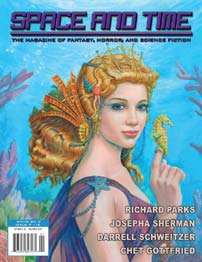
"Barbara Bloodbath," Space and Time Magazine 110, spring 2010, pp. 26-30. Hildy Silverman, Editor in Chief; Gerard Houarner, Fiction Editor; and other editorial staff. It's a thrill being set for another issue of Space and Time Magazine! | ||||||||||
|
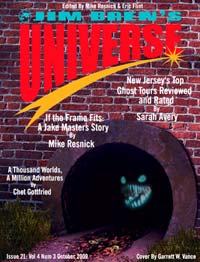
"A Thousand Worlds, A Million Adventures," Jim Baen's Universe, October 2009, pp. 44-52 (of the pdf version). Eric Flint and Michael Resnick, Editors (and Paula Goodlett, Managing Editor). Baen's Universe is a bimonthly e-magazine with a terrific selection of stories, but it's going to be closing down in 2010. Get the magazine while you can!
The science fiction story concerns a travel agent (someone has to book flights to other worlds). As in so many of my stories, it isn't a question of "What if?" as much as "What can go wrong now?" Funny how things happen. I had mentioned to Paula, when the issue first came out, that the pdf version didn't look too good; I could do better. She said go ahead, and I did. In one day, so my composition work is a little rough on the edges, but the issue came out looking very respectable.
"The Restaurant of Dr. Martin," Town & Gown, February 2009, pp. 50-53. David Pencek, Editorial Director. A glossy magazine local to State College, Town & Gown is truly high class, and a pleasure to be included in it. February is the annual fiction issue, and my story won in one of four categories. On February 12, 2009, the four winning stories from the February issue were read at the Schlow Centre Region Library, State College, forTown & Gown's Masters of Fiction Coffeehouse.
"Modern Monotremes," Space and Time Magazine 104, Summer-Fall 2008, pp. 22-26. Hildy Silverman, Editor in Chief; Gerard Houarner, Fiction Editor; and other editorial staff. Space and Time Magazine is one of the oldest sf magazines around, having already printed over a hundred issues. I've known and been in the magazine years back, and it's a treat to be in S&T again with a new publisher.
"A Perfect Foot," Withersin Magazine, death issue 1.3, 2008, pp. 33-40. Misty Gersley, Editor. Withersin is a beautifully designed print magazine, devoted to horror, and has an extensive website well worth visiting. The magazine is available online at its website and (by the end of April 2008) at various bookstore chains.
"Home, Home on the Brain," Serpentarius Magazine, vol. 1, no. 1, 2008; N. E. Dix, Editor (with other editors). Serpentarius only lasted for a single issue (its website was hacked twice), but I'm making that issue available here (since distribution was free).
"Amoeba Rules," AlienSkin Magazine, February-March 2008; Katherine A. Patterson, Senior Editor (and there are also a number of other editors and columnists). AlienSkin was a splendid (and free!) web magazine featuring fantasy, science fiction, and horror stories, as well as columns and articles, and I'm happy that my story was part of the magazine. (There may be a future anothology of stories that had appeared in AlienSkin.)
"Mrs. December, 1636," Grantville Gazette, July 2007 (issue 12), edited by Paula Goodlett. The Grantville Gazette is a new and not new e-magazine. Although it has already been around for ten issues, the May issue (number 11) will be the first with which it started paying pro rates.
"Dino Egg, $6," Jim Baen's Universe, April 2007, edited by Eric Flint (and assistant editor Paula Goodlett). Baen's Universe is an e-magazine, which started in June 2006. It's quite a treat, for both readers and writers (for the range of stories and, hey! it pays well). For me, it was a moment of high exitement, because it represents my third professional sf sale.
"The Rings of Mars" OG's Speculative Fiction, number 3, 2006, pp. 12-23. OG's Speculative Fiction is edited by Seth Crossman, and the PDF publication is presently available as a free download.
"The Corner Chandler," in Deep Magic, June 2006, pp. 10, 24-27. Deep Magic was an electronic magazine but stopped publication in June 2006, which is unfortunate, as it was exceedingly well done; however, the last issue (with my story) is available via the link on the magazine's name.
"Body Hunt," in Ramsey Campbell, host, and Adèle Hartley, curator, Read by Dawn, volume 1, Bloody Books (an imprint of Beautiful Books, UK), 2006, pp. 227-35. Read by Dawn is a handsomely produced book, so I am particularly happy to be included in it, as well as in the company of fine authors. The book is a tie-in with an international horror film festival, "Dead by Dawn" (in Edinburgh, Scotland), which is run by Adele Hartley.
"Bonding," in S. A. Parham and W. Olivia Race, eds., Southern Comfort: A Charitable Anthology, 2005, pp. 69-76. Mine is an upbeat fantasy story, set in the modern day. A fellow loses and finds his cats as well as love.
"Patient Virtues," in Mike Philbin, ed., Chimeraworld 3: Twenty-three Tales of Spiritual Decay, Chimericana Books (UK), 2005, pp. 51-56 [available as print on demand or as a pdf]. My story stems from an extended dream, and as such, I changed the language pacing to reflect that. It has a certain rhythm which one normally doesn't encounter. The story also received an honorable mention from the Writers of the Future Contest. "Two by Two," Aboriginal Science Fiction, spring 1993, pp. 108-112. On a colony spaceship, many humans have been transformed into animals to save space. The Steel Eye. Space & Time Books, 1984. My first published novel. Several years ago I wrote a few thoughts about it, and there's a review here. Gordon Linzner of Space and Time is still selling it. "The Royal Split," Raven (UK), no. 8, spring-summer 1981, pp. 24-25. More a prose poem than story, it's about a head rolling off a monarch. Included are two of my illustrations. "My Summer Vacation," Pig Iron, no. 4, 1978, pp. 74-76. A tale about a very unusual summer camp. Later, Pig Iron published a science fiction story of mine. "The Steel Works," Isaac Asimov's Science Fiction Magazine, summer 1977, pp. 135-40. My first professional sale featured my robot detective, later published in The Steel Eye. "A Winged Shadow," Wyrd, no. 5, 1975, pp. 24-30. I don't remember the story, but Greg Stafford, the editor, went on to fame in his own RPG world. "Songs of Carlotta," Aspect: Poetry, Fiction, Reviews, no. 60, 197?, pp. 9, 11. My first published prose poem. "George," Dramatika, 197? My first published play, which took up perhaps a third of the issue. And then there is a whole miscellany. American Dane was a favorite magazine, for which I wrote about a dozen articles, illustrated two covers, one calendar, and, for a few years, had a monthly children's drawing. Of my cartoons and illustrations that have appeared in various small presses, one of my best venues was the tabloid Pulp (edited by Howard Sage), for which I used to have the centerfold, allowing large artwork (i.e., 15 by 20 inches or so). That was a lot of fun. | ||||||||||
Look Out! | Contact